Mr. F's Biology 2013-2014


Course Description
Looking for your HW assignment? It's on Mr. F's CALENDAR
4 April 2014:
Tests for Week 31
REDO = Gene frequencies (Genetic Drift)
Biology:
The Study of Life
2013-2014

Course Objective:
Students investigate, describe, analyze and make conclusions about how organisms function and interact with their environment.
"Take a big bite into Biology! Ra-a-a-wr!"
Instructor: Mr. Fujiyama (You can call me Mr. F, or Mr. Fuji, if it's easier.)
Room: P-6
Periods: 2-6
Contact: [email protected] (Type your name and period in the subject line.)
Text: Biology, S. Nowickie, McDougal Littell, 2008
Online textbook:
(1) Go to www.classzone.com
(2) Set up a student account. You'll see two boxes. Here's how to enter the activation code:
"activation code" in the left-hand box: 5017055
in the right-hand box: 10
Here's what that will look like:

Since you'll need your textbook for class, and since it's so darn heavy, it may be easiest for you to leave your textbook in your locker so you can bring it to class, and use the online version of the textbook for home use.
Course Objectives:
Students investigate, describe, analyze and make conclusions about how organisms function and interact with their environment.
Biology is an A-G requirement. This means that you must pass this course with a C- or better to be eligible to enroll in any California State University (like Cal State Long Beach, for example), or any University of California school (like UCLA and UCI).
Research shows a direct relationship between the amount of education you have and your expected income. Those with college degrees are more likely to have higher earnings because highly educated people are eligible for higher-paying jobs, like engineering, medicine, law...and teaching! Study hard now, and make more money later...it's as simple as that.
Course Outline:
Quarter 1 – Foundations of Cellular Biology
Chapter 2 Chemistry of Life
Chapter 3 Cell Structure and Function
Chapter 18 Viruses and Prokaryotes
Chapter 31 Immune System and Disease
Quarter 2 –Metabolism and Cell Reproduction; Respiratory and Circulatory Systems
Chapter 21 Plant Structure and Function
Chapter 4 Cells and Energy
Chapter 5 Cell Growth and Division
Chapter 6 Meiosis and Mendel
Chapter 7 Extending Mendelian Genetics
Chapter 30 Respiratory and Circulatory Systems
Quarter 3 – Protein Synthesis; Biotechnology; Variation within a Species; Natural Selection and Evolution
Chapter 8 From DNA to Proteins
Chapter 9 Frontiers of Biotechnology
Chapter 10 Principles of Evolution
Chapter 11 The Evolution of Populations
Chapter 12 The History of Life
Quarter 4 – Natural Selection and Ecology; Nervous System
Chapter 13 Principles of Ecology
Chapter 14 Interactions in Ecosystems
Chapter 15 The Biosphere
Chapter 16 Human Impact on Ecosystems
Chapter 29 Nervous and Endocrine Systems
Required materials:
1. BGHS planner (AKA Agenda)--The only way you'll be able to leave class to go to the bathroom is if you have your own planner...I do not allow a student to use another's planner, OK?
2. textbook
3. Interactive Reader, and Study Guide
I request that you also have:
4. A 3-ring binder that's dedicated ONLY to our Biology course.
Grading Scale:
|
100% - 93% |
A |
A |
Advanced |
You demonstrate in-depth understanding of the standards. You can broadly apply the knowledge and skills of the standards across a variety of contexts. |
|
92% - 90% |
A- |
|||
|
89% - 87% |
B |
B+ |
Proficient |
You demonstrate a complete understanding of the standards. You have some ability to apply the knowledge and skills of the standards. |
|
86% - 83% |
B |
|||
|
82% - 80% |
B- |
|||
|
79% - 77% |
C |
C+ |
Basic |
You demonstrate a functional understanding of the knowledge and skills of the standards. |
|
76% - 73% |
C |
|||
|
72% - 70% |
C- |
|||
|
69% - 67% |
D |
D+ |
Below Basic |
You demonstrate a limited understanding of the knowledge and skills of the standards. |
|
66% - 63% |
D |
|||
|
62% - 60% |
D- |
|||
|
59% - 0% |
F |
F |
Far Below Basic |
You demonstrate a lack of understanding of the knowledge and skills of the standards. |
How your grades will be calculated:
|
10% |
practice |
This category includes homework, discussions, participation, demonstrated engagement. |
|
|
40% |
formative assessment |
This means the depth and breadth of your learning as demonstrated through participation, classwork, note-taking in your notebook, drafts of lab reports, independent work, group work, presentations, and quizzes. |
|
|
50% |
summative assessment |
This includes chapter and unit exams, final exams, presentations, final lab reports, and projects. |
|
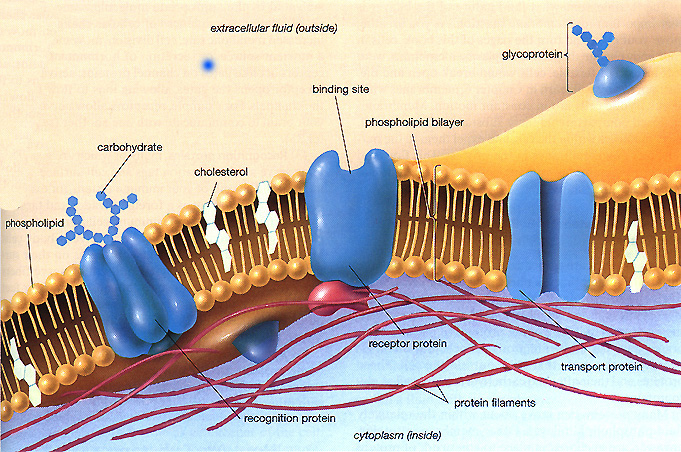
How does a cell use its membrane to control its internal environment?
Hands-on Activities:
We’ll be engaged in a lot of hands-on learning activities, including:
· Three-dimensional modeling to learn about cell membranes;
· Kinesthetic modeling to represent how a cell builds and packages proteins;
· Constructing an “Eco-Column” that will house living organisms like small fish, water plants, insects…
· “Cooking” ceviche as a demonstration of how pH changes enzyme shape, and makes food safe to eat.
Class Expectations:
1. Safety is my #1 job…so it's yours, too!
2. Be here, be on time. Second tardy = "heads-up" phone call to parents; third tardy = 30 minutes after school and phone call to parents. Fourth tardy = referral to office
3. Late work means you don’t have an assignment completed, and you don’t have a written note from your parent to me explaining that this was beyond your control. You can make up late work, in my presence, during tutoring sessions on Mondays, Tuesdays and Thursdays after school, for full credit, but only during the week that the assignment was due.
If you don't make up late work, you'll owe me a 30 minute detention on the first Friday immediately after that missed HW, and I'll call home to make sure your parents know that you'll be with me then.
4. Work is not late there is a situation out of your control (family illness, etc), AND you bring a written note from your parent. Fair enough?
5. If you need to make up a Quiz or Test, the makeup might be oral rather than written.
6. If you’ve been absent, and your absence is excusable, you have as many days (including weekend days) as you were absent to complete missing work. It’s your responsibility to find out what you missed, so make sure you network with classmates to keep up.
Safety issues:
1. Always be safety-conscious. Move about the laboratory in a safe manner.
2. Report all accidents. No accident is too small to report.
3. Know the locations of safety equipment in the laboratory; use only in emergencies.
4. Listen to instructions, and become familiar with all of the health and safety hazards of equipment and chemicals.
5. Safety glasses must be worn while working with any chemical that could be harmful to the eyes, or when working with heat, or when working with glassware.
6. Use hot plates, stoves, and other heat sources only at the direction of the teacher. Never leave heat sources unattended.
7. Confine long hair while working in the laboratory; watch for flames and machinery.
8. Always wash your hands thoroughly at the end of the laboratory period. When handling chemicals, keep your hands away from your face, eyes, and body, until they have been washed.
9. If a chemical is splashed or spilled on your skin, flush it away with plenty of water.
10. If you should get chemicals into your eyes, go directly to the eyewash fountain and gently flush with water. Report this immediately to your teacher.
11. Do not consume food or drink beverages while in the laboratory; never taste chemicals.
12. Keep desk tops clear of all books, clothing, and other personal property except necessary lab directions and notebooks.
13. Report any damage of equipment to the instructor.
14. Handle only materials that you are assigned to work with.
15. Use acids and bases with caution. Wipe up spilled material at the direction of the teacher. Watch out for eyes, skin, and clothing.
16. Do not use unlabelled chemicals. Check label twice to be sure that you have the right bottle. Refer unlabelled containers to your teacher.
17. Follow all instructions, both written and verbal. If you think some changes in procedure are necessary or desirable, check with your teacher.
Broken Glassware
1. Broken glass – Tell me first; then clean up immediately with brush and pan. There's a plastic rectangular bin on the "back deck" of the classroom where the sinks are located, and the lid is labeled "BROKEN GLASS". The shards of broken glass go in there, NOT in the trash can (where an unsuspecting custodian can get cut when he/she empties the can!)
2. Before inserting (or removing) glass tubing or thermometers into corks or stoppers, check with your teacher for proper procedure.
Avoiding Burns
1. Keep a lighted burner away from clothing, books, or other combustibles. Lean away from top of Bunsen burner while it is being lit. When heating test tubes, point them away from people.
2. Hot glass looks just like cold glass. Use care when touching glass objects that have been heated.
3. To heat easily evaporated (volatile) flammable liquids, use a water bath, inside a fume hood if possible.
4. Do not heat anything inside a closed container (like a tighly capped jar).
Handling Chemicals
1. To smell the contents of a container, use a \"wafting\" action of the hand.
2. Use care to avoid splattering of solutions when heating to dryness.
3. Never use mouth for pipetting up poisons, corrosive liquids, organic solvents, live cultures, or contaminated materials. Use automatic pipettors at the direction of your teacher.
4. Always add acids to water slowly, carefully, and with a gentle stirring action (solid glass rod only).
Electrical Precautions
1. Before connecting equipment to a power source, examine all wiring for electrical defects.
2. Make sure that all equipment is properly grounded.
3. Make sure that your hands are dry; that the work area is dry.
4. Be certain that the proper voltage is available.
QUIZ Center

Here is the link to all the quizzes you’ve taken online so far. It’s OK for you to access them, and practice.
The access code is oktopractice